
Chinese ambassador to India, Xu Feihong, on Wednesday expressed hope that the recently completed Indo-China border disengagement in Eastern Ladakh would smoothen relations and pave the way for a better understanding between the two neighbours in the days ahead.

Chinese Foreign Minister Wang Yi has expressed readiness to join hands with India's National Security Advisor Ajit Doval to "properly handle" issues related to the situation on the ground in the border areas, amid the protracted border row in eastern Ladakh.
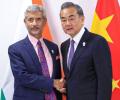
The joint statement said Jaishankar and Wang agreed that both sides should take guidance from the series of consensus reached between leaders of the two countries on developing India-China relations, including not allowing differences to become disputes.

China, however, remained ambiguous about the status of its own troops.
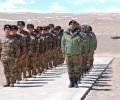
Chinese foreign ministry spokesperson Mao Ning told the media in Beijing on Monday that the two sides held an in-depth exchange of views on expediting the resolution of relevant issues.

National Security Advisor Ajit Doval on Monday emphasised the need to counter terrorism in all its forms for overall regional peace and stability during a meeting with Chinese Foreign Minister Wang Yi in Beijing.
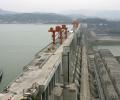
China has defended its plan to build the world's largest dam on the Brahmaputra River in Tibet, assuring that the project will not affect riparian states and safety issues have been addressed through decades of studies. The dam, estimated to cost USD 137 billion, has raised concerns in India and Bangladesh, but Chinese authorities maintain that the project has been thoroughly studied and safeguards are in place. The dam is part of China's efforts to develop clean energy and respond to climate change.
China has approved the construction of the world's largest dam on the Brahmaputra River in Tibet, close to the Indian border. The USD 137 billion project, which is expected to dwarf even China's own Three Gorges Dam, has raised concerns in India and Bangladesh, the downstream riparian states. Concerns in India are centered around China's potential to control water flow, potentially enabling the release of large amounts of water to flood border areas in times of hostilities. The dam is part of China's 14th Five-Year Plan, and the Chinese government claims that the project is safe and prioritizes ecological protection.
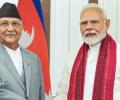
Nepal's claim on Lipulekh and Kalapani reopens a 200-year-old border dispute, while historical maps and treaties show the area belongs to India, asserts Lieutenant General Shakti Gurung (retd).

'Given China's past behaviour and their territorial claims, should we be sceptical regarding China's willingness to adhere to these agreements fully? The answer is yes.' 'As Ronald Reagan famously said in the context of the SALT talks, 'Trust, but verify!' India should also do the same.' 'This has already begun with foot patrolling, drones, satellite imagery and so on. India's military deployment did mirror China's and will continue to do so in the future.'

China has reiterated its plan to build the world's largest dam over the Brahmaputra River in Tibet, near the Indian border. The Chinese Foreign Ministry has assured that the project, estimated to cost around USD 137 billion, will not have any negative impact on downstream countries, India and Bangladesh. The ministry has stated that the project has undergone rigorous scientific verification and will be conducive to disaster prevention and mitigation, as well as climate change response. India has expressed concerns about the dam, raising the issue during talks with the visiting US National Security Advisor, Jake Sullivan. China has maintained that the project will not negatively affect the lower reaches and has committed to maintaining communication with downstream countries.
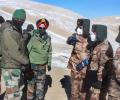
Foreign Secretary Harsh Vardhan Shringla terms India's relationship with China as "complex".

The two sides held diplomatic talks through video conference on the border standoff in midst of fresh details emerging that China has strengthened its position in several areas in eastern Ladakh including Galwan Valley where a violent clash on June 15 left 20 Indian soldiers dead.
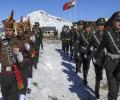
'They also agreed that for the overall development of bilateral relations it was essential to maintain enduring peace and tranquillity in the border areas,' the MEA said in a statement.
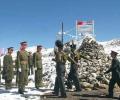
The two sides have already held at least 12 rounds of talks between local commanders and three rounds of talks between major general-rank officials but no positive outcome came out from the discussions, they said.

It is learnt that the India's top military brass is constantly monitoring the evolving situation even as the United States said the aggressive behaviour by Chinese troops was a reminder of the threat posed by China.

After India firmly told China that its violation of the border pacts has "eroded" the entire basis of bilateral ties, China's defence ministry on Friday said the situation at the border is "generally stable" and both sides should put the boundary issue in an "appropriate position" and promote its transition to "normalised management".

India's Foreign Secretary Vikram Misri has arrived in Beijing for a two-day visit during which he will hold talks with Chinese officials. The visit comes amid ongoing efforts to de-escalate tensions along the Line of Actual Control (LAC) in eastern Ladakh and to resume bilateral cooperation in various fields, including the Kailash Mansarovar Yatra.
India on Monday pressed for early disengagement of troops in remaining friction points in eastern Ladakh during a fresh round of high-level military talks with China, people familiar with the matter said.

The Indian Army has been matching up to the Chinese build up in both Pangong Tso lake and Galwan Valley, the two locations in Ladakh which have witnessed major reinforcement of troops in the last two weeks, sources said. There was very little chance of easing of tension anytime soon as both sides are aggressively holding onto their respective positions, they said.

Chinese media on Wednesday criticised the western media for attempting to drive a "wedge" between India and China.
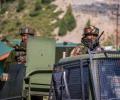
'Why has the peace been kept?' 'Basically because there is a balance.' 'Maybe they think that balance has changed.' 'People can make mistakes. People can miscalculate.' 'If that is the cause, then I think what we have done, matching their build-up, etc, it is giving a good account of ourselves in the face-offs.'

In their first structured bilateral talks in nearly five years, Prime Minister Narendra Modi and Chinese President Xi Jinping Wednesday agreed that India and China can have a 'peaceful and stable' relationship by displaying maturity and mutual respect and endorsed the pact on the resolution of the dragging eastern Ladakh border row.
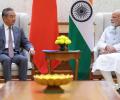
'New Delhi is not naive about its foreign policy choices.'
The Indian side is expected to present specific proposals at the talks to deescalate tension in Pangong Tso, Galwan Valley and Demchok -- the three areas in eastern Ladakh where the two sides have been on a bitter standoff for last one month, the sources said.

'The government will ensure that India's pride is not affected as far as the situation along Indo-China border is concerned'

External Affairs Minister S Jaishankar on Tuesday targeted Jawaharlal Nehru and claimed that past mistakes were responsible for the problems such as Pakistan Occupied Kashmir (POK) and occupation of some parts of the Indian territory by China.
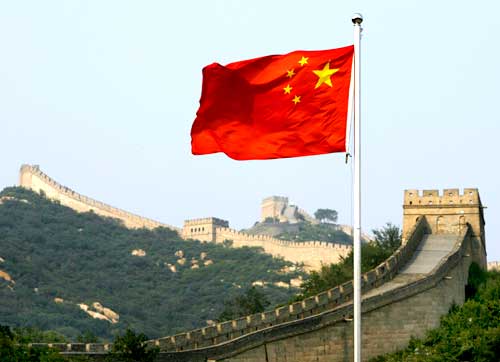
Describing the boundary talks with China as "positive", National Security Adviser Ajit Doval on Friday said India has inalienable positions and the government will protect vital national interests.
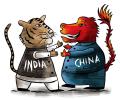
India and China achieved a major milestone this year when their bilateral trade crossed the landmark figure of $100 billion but it did not generate any fanfare in both capitals as the two Asian giants are going through a "particularly bad patch" in their relations due to a set of actions by Beijing in violation of agreements that led to the military standoff in eastern Ladakh. Starting with a modest $1.83 billion in 2001, the bilateral trade crossed $100 billion-mark in the first 11 months this year, a significant milestone for which the two countries carried out campaigns to boost trade and build it as a major stakeholder to improve the relations between two nations, whose ties otherwise remained frosty over the festering boundary dispute and strategic rivalry. According to last month's data from China's General Administration of Customs (GAC), the India-China bilateral trade totalled $114.263 billion, up 46.4 per cent year-on-year from January to November 2021.
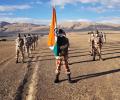
India and China on Friday agreed to hold the next round of military talks at an early date to achieve the objective of complete disengagement in remaining friction points in eastern Ladakh amid fresh sparring between the two sides on the prolonged Line of Actual Control (LAC) standoff.
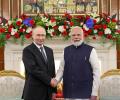
Luckily for us, a Russia that is desperate to stay relevant in an emerging multipolar world finds in India a reliable geostrategic partner. The Russian proximity to India also keeps China from exploiting its economic dominance vis a vis Russia, points out Colonel Anil A Athale (retd).

India is set to press for early disengagement of troops from the remaining friction points in eastern Ladakh at a fresh round of high-level military talks with China on August 14, people familiar with the matter said on Saturday.

'We should carefully handle issues concerning each other's core interests. We should properly manage and control problems that cannot be solved for the time being'
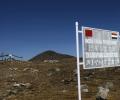
India has been rejecting China renaming places in Arunachal Pradesh, asserting that the state is an integral part of the country and assigning "invented" names does not alter this reality.

Although the special relationship might compel Bhutan to be considerate of Indian interests, new challenges will likely arise. An emerging new phase of relations will also call for fresh redlines between India and Bhutan, observe Harsh V Pant and Aditya Gowdara Shivamurthy.

Special Representatives of India and China will hold the 16th round of boundary talks in Beijing on Friday, the first such meeting under the new Chinese leadership, to make another bid to move forward on the resolution of the vexed dispute.
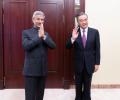
'We stress that the boundary issue shall not be linked with the overall bilateral relations. That is an important experience we have gathered through many years' effort to keep the ties moving forward
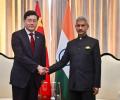
Qin's first in-person meeting with Jaishankar on Thursday came on the sidelines of the G20 foreign ministers conclave in New Delhi amid the over 34-month-long border row in eastern Ladakh.
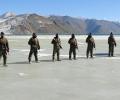
"Against such background, the words and deeds of relevant important military and government officials and military deployments should be conducive to deescalating and cooling down the situation, and to enhancing mutual trust, rather than the opposite", the spokesman said.

Who knows, the moment of truth in Ladakh may also augur for a giant leap toward boundary settlement with China in the fulness of time. The news that the special representatives of the two countries are planning to meet gives a positive signal, suggests Ambassador M K Bhadrakumar.
